Playable Places
Turning digital twins into immersive, interactive, playable experiences.
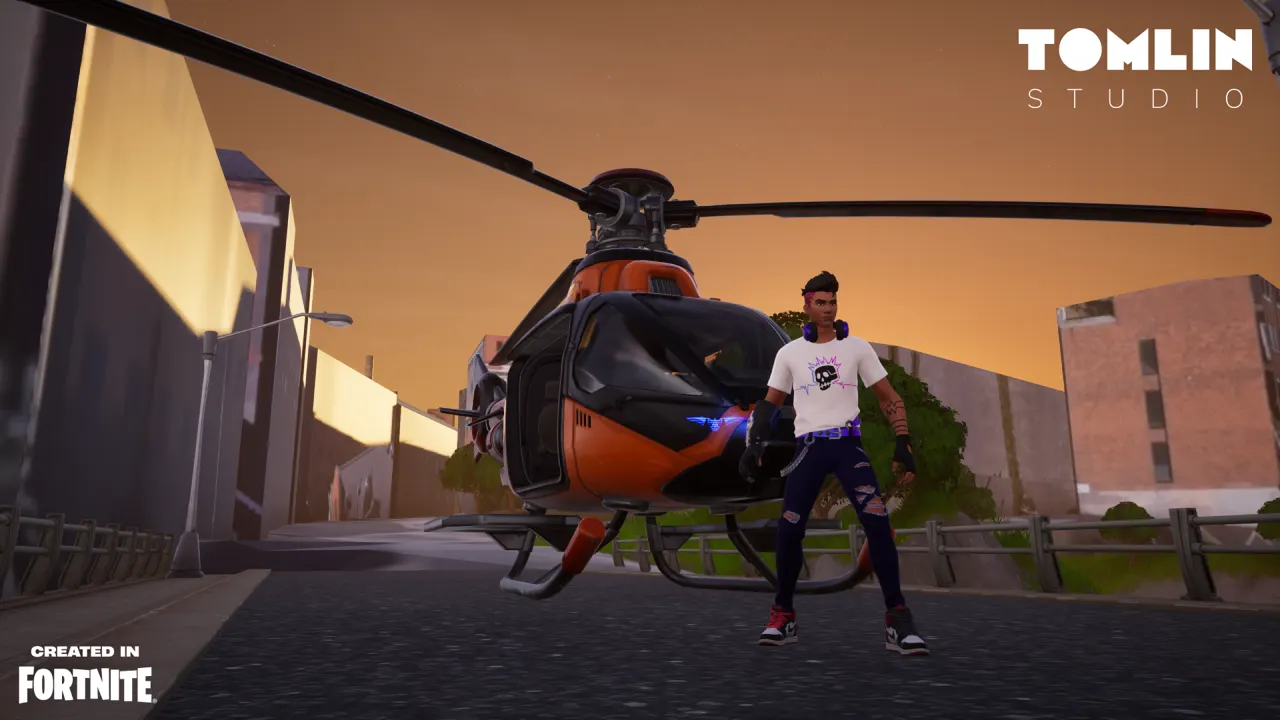
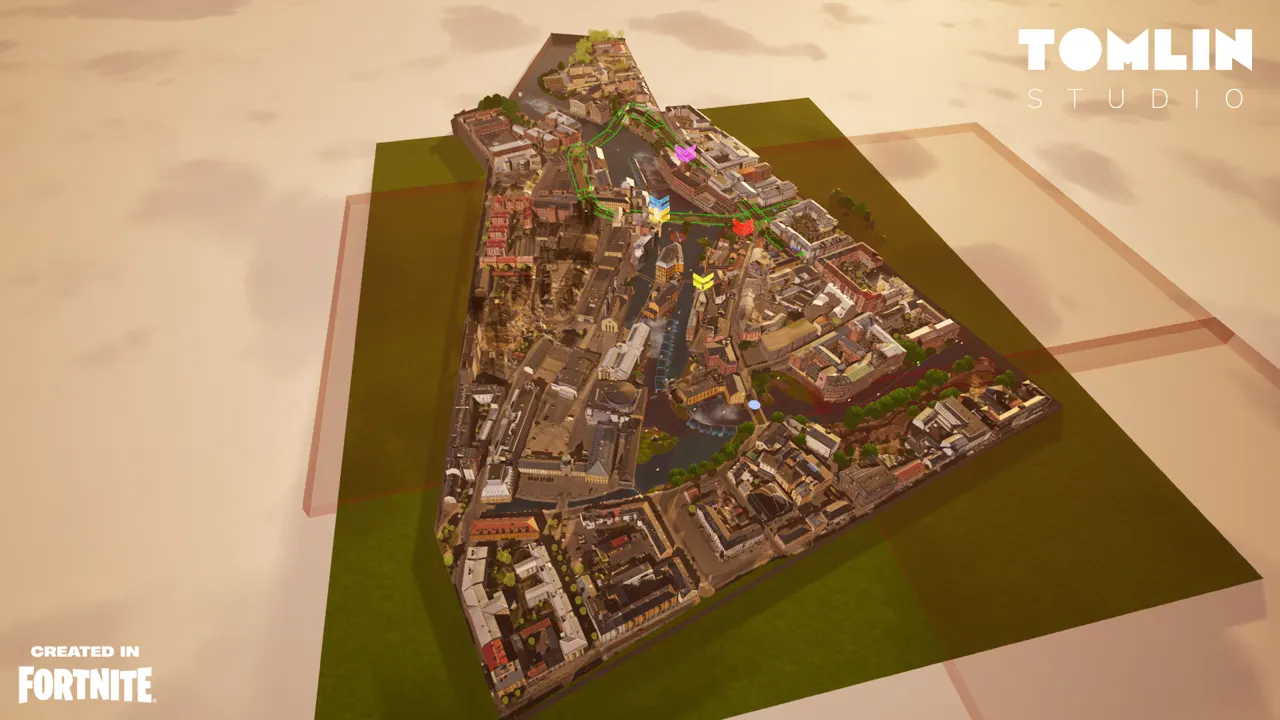
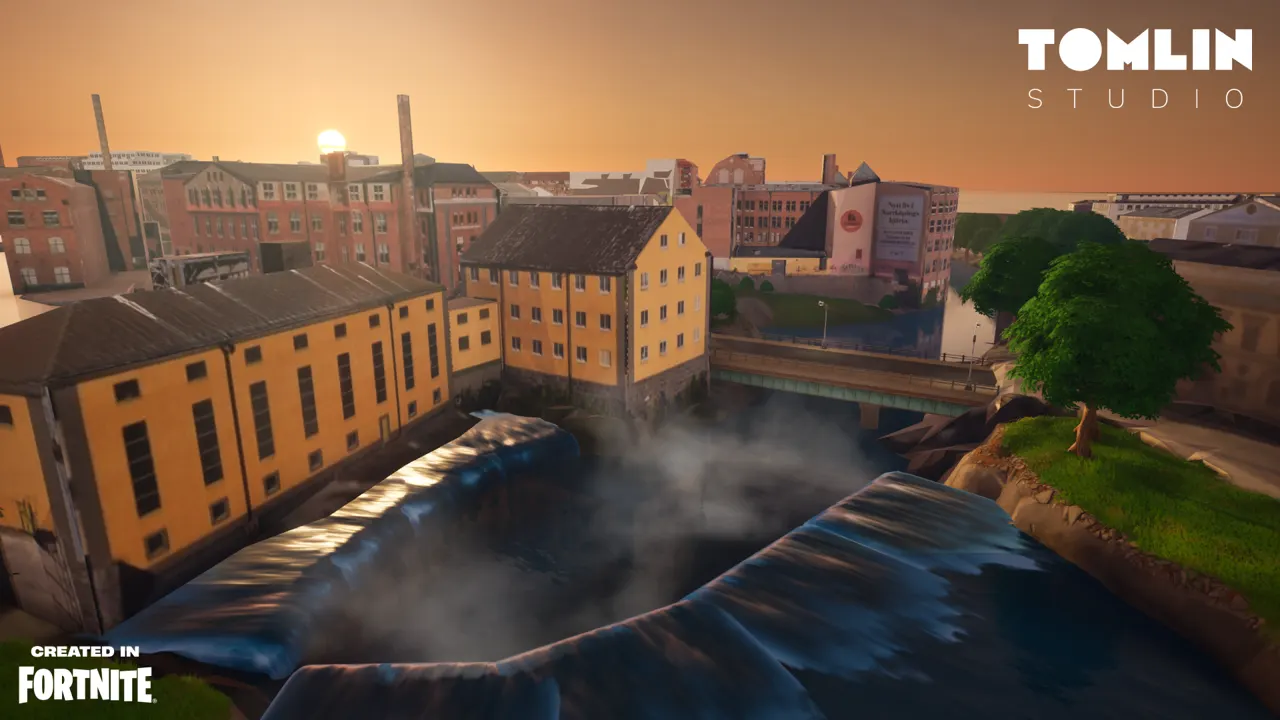
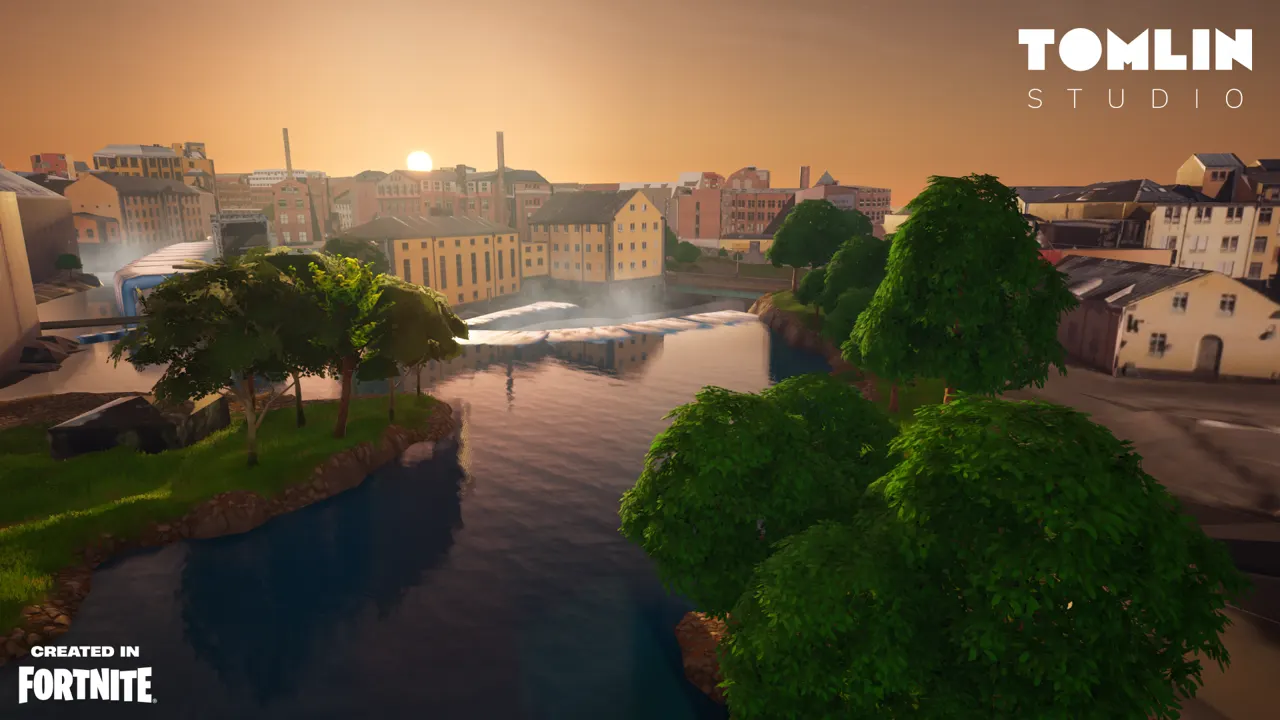
Playable Places is TOMLIN STUDIO’s exploration of how digital twins, photorealistic, geospatial 3D models of real places, can become more than simulations. Built in Unreal Engine or Unreal Editor for Fortnite (UEFN), real places don’t just get mapped, they get played.
This was not about building a finished game. Playable Places tested, validated and documented:
- Whether a real digital twin, based on drone data and photogrammetry, can be implemented in Fortnite
- Which technical limits apply when importing meshes, textures and geo-accurate data into UEFN
- How a game-ready template can be structured so students, researchers or municipalities can build on it
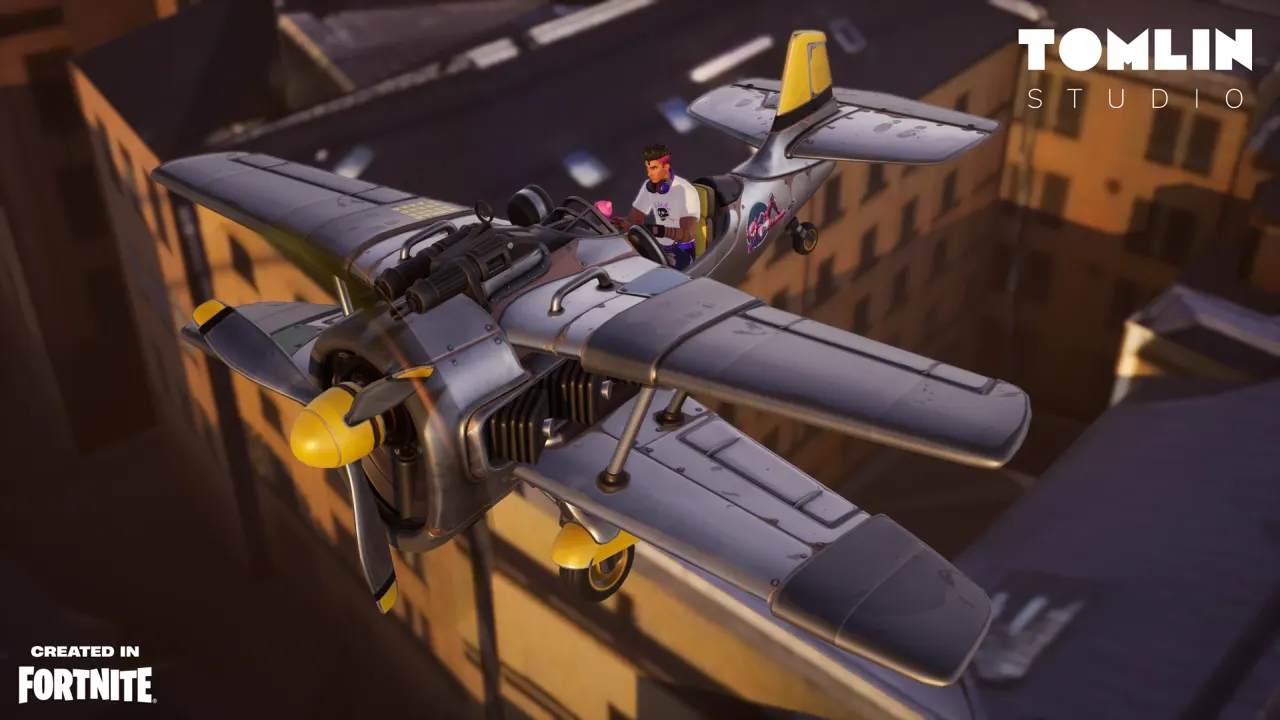
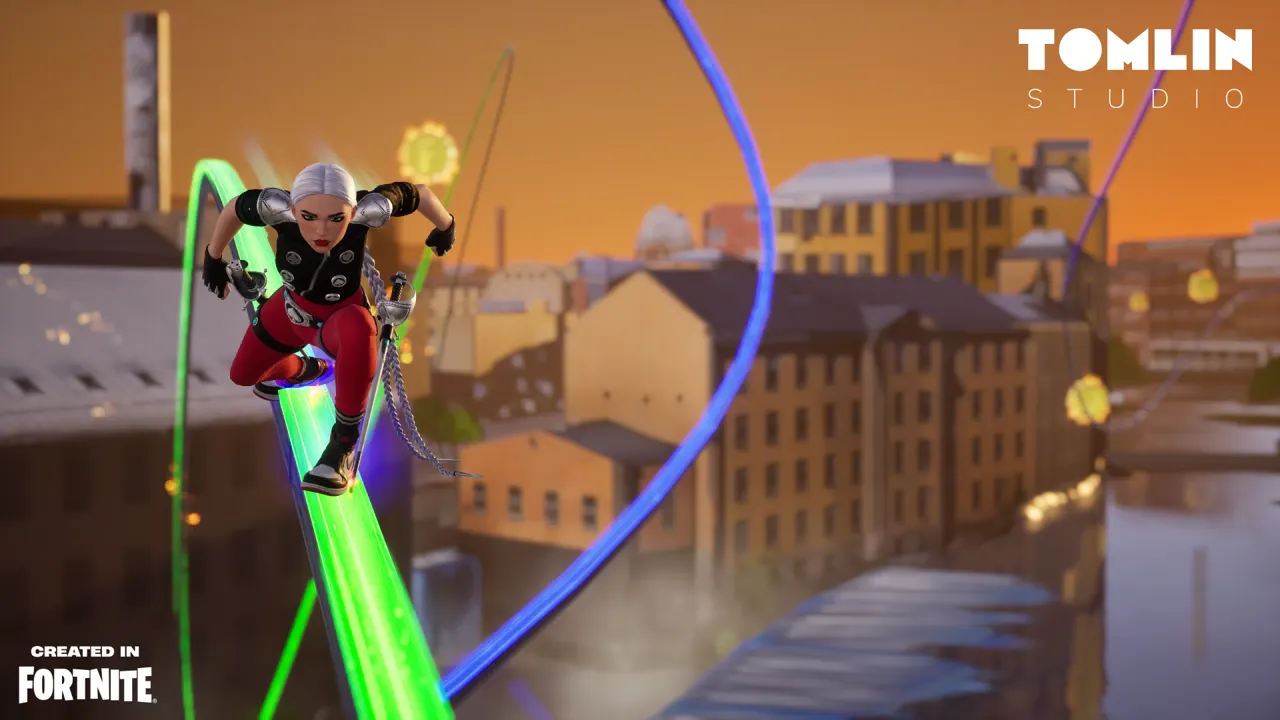
- Which gameplay elements, such as flying, collectables or obstacle courses, work on top of a digital twin
- Whether the method could grow into a commercially viable service or product
The result is a game-ready place and a modular foundation, not a finished game: the kind of environment that suits a game jam, a university course or a local activation.
Digital twins do not have to stay locked inside planning tools. Made interactive, they can open up to:
- Student-led innovation in visualisation and game design
- Public engagement through playful exploration
- Game jams and creative experimentation
- Immersive storytelling and place branding
Play is one of the most effective ways people learn, test ideas and understand complex systems. Making a twin playable adds a new layer of access, interpretation and imagination.
From our talk at Unreal Fest Stockholm 2025, “Making Digital Twins Playable: From UEFN to UE”. Playable Places combines several ways of capturing and simulating reality:
- Photogrammetry and Gaussian Splatting for visual realism
- OpenStreetMap data for structure, scale and layout
- Cesium and Google Photorealistic 3D Tiles for large-scale context
- Generative AI to speed up workflows and adapt environments, for example changing time of day, lighting or season
The talk also compared the pros and cons of UEFN/Fortnite and Unreal Engine for this kind of work.
Partly Vinnova-financed via Visual Sweden membership, with Linköping University and a Swedish municipality: a digital twin of a historic industrial landscape, turned into a playable Fortnite experience. Presented at Unreal Fest Stockholm.
The project explored whether real-world photogrammetry and geodata can be brought into Fortnite, and what gameplay mechanics can be layered onto real places.
It proved hard to convert into further paid follow-on work, part of what informed the studio’s pivot toward the GenAI direction. Kept here as shipped IP and R&D credential, not an active service line.